These frequently asked questions provide practical information about Palm Coast Plantation, including ownership, homesites, boating, flood zones, community rules, environmental considerations, and other topics that commonly come up when evaluating property within the community.
Information is compiled from Palm Coast Plantation HOA documents, architectural guidelines, community materials, MLS data, and other dependable sources believed to be accurate. Rules, fees, policies, flood-zone information, and other property-specific details can change, so current information should be confirmed for the individual property and transaction.
Amenities
Yes. Residents may bring guests to Palm Coast Plantation amenities, though guest limits and ages vary by facility. Residents are required to accompany their guests while using community amenities.
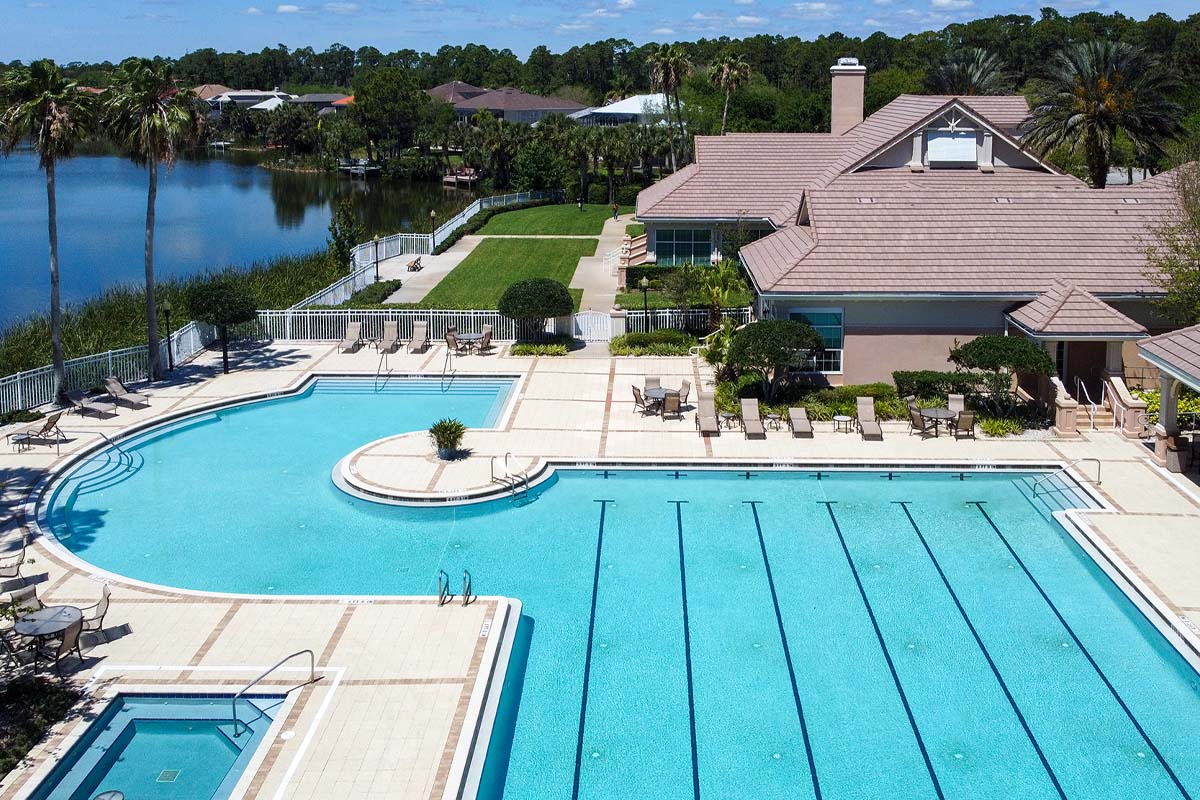
Hours vary by amenity. The pool, spa, playground, shuffleboard, bocce, horseshoes, and Intracoastal dock and gazebo are available from dawn to dusk. Tennis, pickleball, and basketball courts are open from 7:00 a.m. to 10:00 p.m., while the fitness room is available 24 hours a day.
Palm Coast Plantation issues amenity cards to property owners for access to several community facilities, including the clubhouse, fitness room, game room, pool area, tennis and pickleball courts, and basketball courts. Two amenity cards are issued per property.
Condominium and townhome owners must belong to the club. The condominium association collects club dues for condominium units through the monthly assessment. Buyers should confirm the assessment and any unit-specific charges for the property they are considering.
Palm Coast Plantation has two on-site storage areas for qualifying boats, RVs, trailers, and other approved recreational vehicles. Spaces are limited, assigned on a first-come, first-served basis, and require annual registration and very reasonable fees. Both storage areas have controlled access, and one includes an automated gate and security cameras.
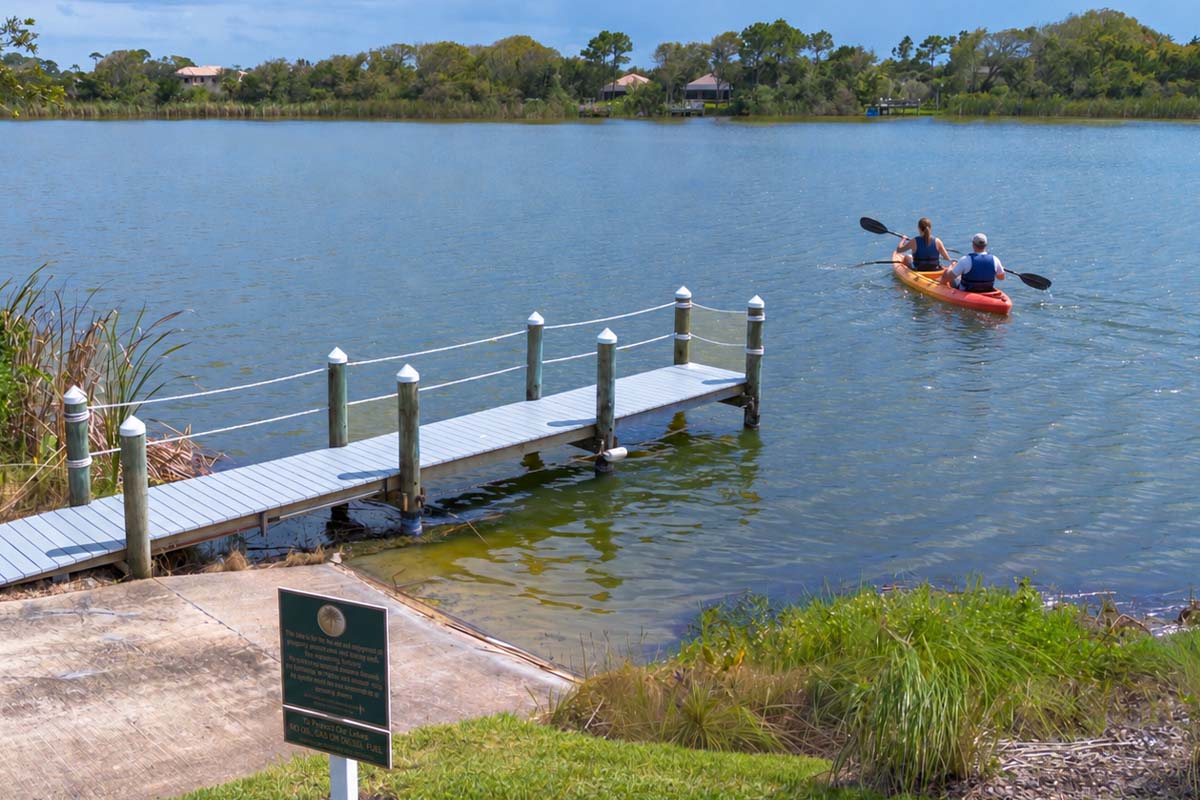
Residents may use electric-powered, sail, and self-propelled boats on Emerald Lake. Internal-combustion engines may not be used or mounted on boats while on the lake, and boats over 19 feet are not permitted. The community boat ramp is available from dawn to dusk.
No. Palm Coast Plantation does not have a boat launch onto the Intracoastal Waterway. The community boat ramp provides access exclusively to Emerald Lake. For Intracoastal boating, adjacent Herschel King Park provides a public boat ramp with direct access to the Intracoastal Waterway.
Homesites & New Construction
Yes. Palm Coast Plantation has no time limit for owners to start building on a vacant homesite, so buyers can purchase property now and build when they're ready. However, once the Architectural Review Committee (ARC) approves building plans, construction must begin within six months. Following written authorization to begin construction, the home must generally be completed within 12 months.
Yes, but the builder must meet Palm Coast Plantation's requirements. The ARC requires new construction to be performed by a licensed contractor or builder with demonstrated custom-home experience and reserves the right to review builder qualifications.
The current ARC Guidelines recommend approximately 2,600 square feet of heated and air-conditioned living area for Intracoastal homesites, 2,400 square feet for lakefront homesites, and 2,000 square feet for other homesites. Different recommendations apply to combined or double lots. Review the governing Declaration for the controlling minimum applicable to a particular property.
ARC review extends well beyond new-home construction. Exterior renovations, pools and screen enclosures, docks, fences, landscaping changes, generators, solar panels, driveway modifications, exterior colors, tree removal, and other exterior improvements require review before work begins.
Not always. General guidelines set minimum front, rear, and side setbacks, but conservation easements, lakefront conditions, drainage easements, and certain sections of the community can affect how a particular homesite can be developed.
Environmental
Conservation easements were incorporated into much of Palm Coast Plantation as part of the original development approvals. They protect natural vegetation, wetlands, and portions of the community's stormwater-management system. The location of an easement affecting an individual property should appear on the property's survey.
Yes. A conservation easement, wetland tract, or Vegetative Natural Buffer can reduce the portion of a homesite that may be cleared or improved. For buyers considering vacant land, I look at these areas along with setbacks and the proposed home footprint rather than relying solely on the property's total acreage.
Generally, no. Palm Coast Plantation's governing rules prohibit owners from clearing, damaging, or otherwise altering designated conservation areas without the required approvals from the appropriate regulatory authorities and the community.
Tree removal is regulated. Trees meeting the size threshold established by the community require prior ARC approval, and additional restrictions can apply within conservation areas, wetlands, and buffers.
Yes. The ARC Guidelines require Intracoastal surveys to identify the wetland tract line and its associated upland buffer. These protected areas can affect clearing, dock access, and where you can place improvements on an individual property.
Gate Access & Visitors
New owners receive two vehicle barcodes and two amenity access cards through the community registration process. Additional or replacement credentials may carry a fee.
Guests arriving outside staffed hours use the virtual-guard system at the main entrance. The homeowner must register the visitor in advance, and the guest provides identifying information through the two-way video system before access is granted.
Yes. Register guests, vendors, and contractors before arrival. If someone arrives without prior authorization and the access officer cannot reach the homeowner, entry may be denied.
HOA Rules & Ownership
No. Residential leases must be at least six months, and you must provide them to the property manager for compliance verification.
A home office is permitted as long as it does not generate business traffic in the community. Other business activity conducted from a home or homesite is prohibited under the current Rules & Regulations.
Yes, subject to ARC approval and design restrictions. Fences cannot be used to define the entire property boundary, cannot extend beyond the front corners of the home, and must comply with setback and drainage-easement requirements. Wire, chain-link and wood fences are prohibited.
Yes, but both require ARC review. Generators and other exterior equipment must also meet screening and placement requirements, particularly where drainage easements are involved.
The current Rules & Regulations allow up to three household pets per residence unless otherwise approved by the Board. Pets must be kept under control and may not roam freely through the community.
Vesta Property Services manages Palm Coast Plantation's homeowners association and helps residents with gate access, amenity cards, HOA payments, and other community matters.
Palm Coast Plantation HOA
122 Emerald Lake Drive, Palm Coast, FL 32137
Tel: (386) 439-0791
Vesta Property Services – Flagler Beach Office
411 S. Central Avenue, Flagler Beach, FL 32136
Tel: (386) 439-0134
Email: pcpadmin@vestapropertyservices.com
Office hours are Monday through Friday, 9:00 a.m. to 5:00 p.m., with a daily lunch closure from noon to 1:00 p.m. Residents may call, email, or visit during office hours and can arrange appointments by telephone.
Flood Zones & Insurance
No. Flood-zone designations vary within Palm Coast Plantation and should be evaluated for the individual home or homesite. If provided by the listing agent, the reported flood-zone designation is displayed in the Lot and Land section of each property listing on this site.
That depends on the property's flood-zone designation and how the purchase is financed. Properties located within FEMA Special Flood Hazard Areas generally require flood insurance when the property is secured by a federally backed mortgage. Properties outside those higher-risk zones may not have the same lender requirement, although owners may still choose to carry flood coverage.
The most common flood-zone designations buyers may encounter include:
Zone X — Generally considered a lower-risk area outside the Special Flood Hazard Area. Federally backed lenders typically don't require flood insurance, though coverage may still be available and worth considering.
Zone A — High-risk flood area where no Base Flood Elevation has been established.
Zone AE — High-risk flood area with established Base Flood Elevations.
Zone AH — Area subject to shallow flooding, generally one to three feet deep, with established Base Flood Elevations.
Zone AO — Area subject to shallow sheet-flow flooding, generally one to three feet deep.
Zone A99 — Area expected to receive protection from a federal flood-control system that is under construction.
Zone AR — Area where flood risk has temporarily increased while a flood-control system is being restored.
Zone V — Coastal high-hazard area subject to wave action where no Base Flood Elevation has been established.
Zone VE — Coastal high-hazard area subject to wave action with established Base Flood Elevations.
Properties within FEMA’s high-risk flood areas have at least a 1% chance of flooding in any given year. That is commonly referred to as the “100-year flood,” although that term can be misleading because flooding can occur more than once within a 100-year period. Over a 30-year mortgage, that annual probability equates to roughly a 26% chance of experiencing a flood event.
No. A waterfront location by itself does not determine the insurance requirement. The FEMA flood-zone designation for the specific property, together with lender requirements, is what matters. That is why I look at each Palm Coast Plantation property individually rather than making assumptions based solely on whether it is lakefront, marshfront, or Intracoastal.
Parking, Boats & RV Storage
Boats, RVs, and commercial vehicles may not normally be parked overnight at a residence. The rules allow temporary parking for loading, unloading, cleaning, or routine maintenance for up to 48 hours; additional arrangements require approval from the property manager.
Yes. Palm Coast Plantation has two on-site storage areas for registered boats, RVs, and certain other approved recreational vehicles. Spaces are assigned, subject to availability, and require annual registration and payment of the applicable storage fee.
No. A boat or RV storage space does not transfer to the property's purchaser. A new owner must apply separately and may need to join the waiting list if no space is available.
Generally, vehicles must be parked in a garage or driveway overnight. Overnight street parking requires the property manager's authorization.
Waterfront, Docks & Boating
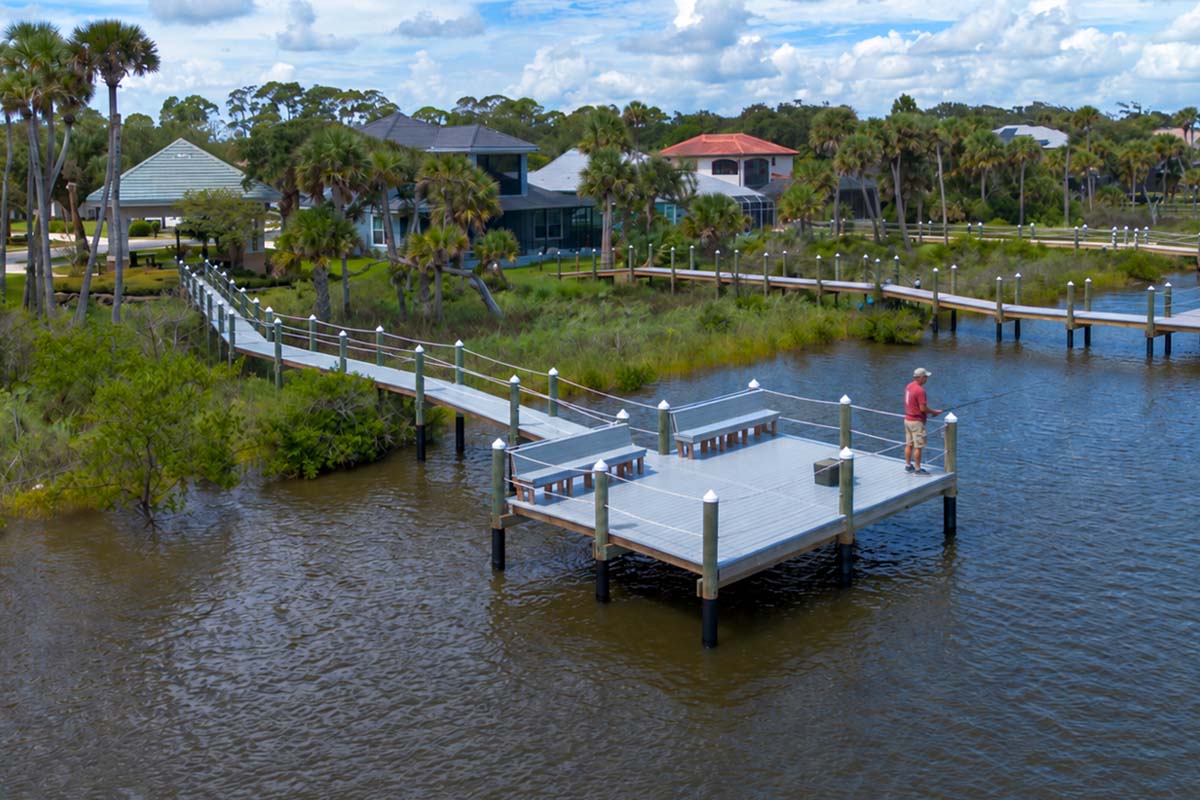
Yes. Intracoastal homesites may have private docks, subject to ARC approval and applicable governmental permitting. Many Intracoastal lots were designed around shared access walkways serving pairs of adjoining docks, so review the dock configuration for the individual homesite before purchase.
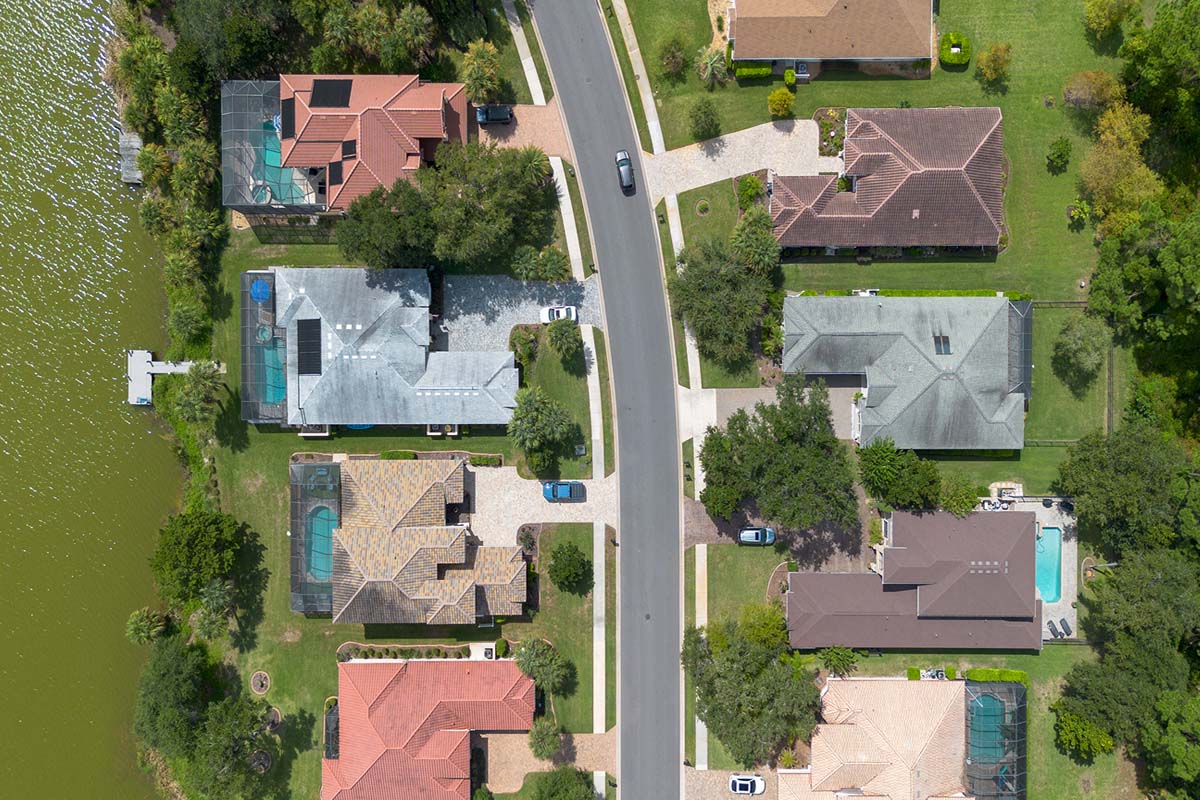
Yes. Private lake docks are permitted on qualifying lakefront homesites, subject to ARC approval. The current design guidelines specify a standard dock size of 10 feet by 20 feet, with the longer dimension running along the shoreline.
Palm Coast Plantation's community boat ramp serves Emerald Lake, not the Intracoastal Waterway. You can launch on the Intracoastal nearby at Flagler County's Herschel King Park.
Residents may use electric-powered, sail or self-propelled boats. Internal-combustion engines may not be used or mounted while a boat is operating on the lake, and boats longer than 19 feet are not permitted. Lake access is from dawn to dusk.
Yes, but a Palm Coast Plantation resident must be aboard when a guest uses a private boat on the lake.
Fishing and boating are permitted on Emerald Lake, subject to community rules. Boats must be electric-powered, sail-powered, or self-propelled. Gas-powered or other internal-combustion engines are not permitted for recreational use on the lake. Other lakes and retention ponds within Palm Coast Plantation are not open for boating, diving, or fishing. Bass in Emerald Lake are catch-and-release, while certain other species may be kept within Florida limits.
Latest Articles
Insights from Experience Palm Coast Plantation
Recent articles, market notes, and community insights related to
Palm Coast Plantation.
 HOA & Ownership
Pets, Parking, and Noise Rules in Palm Coast Plantation